- Published on
Garmin Fenix 9: Official U.S. Prices, 64GB Storage and a Larger 51mm Display
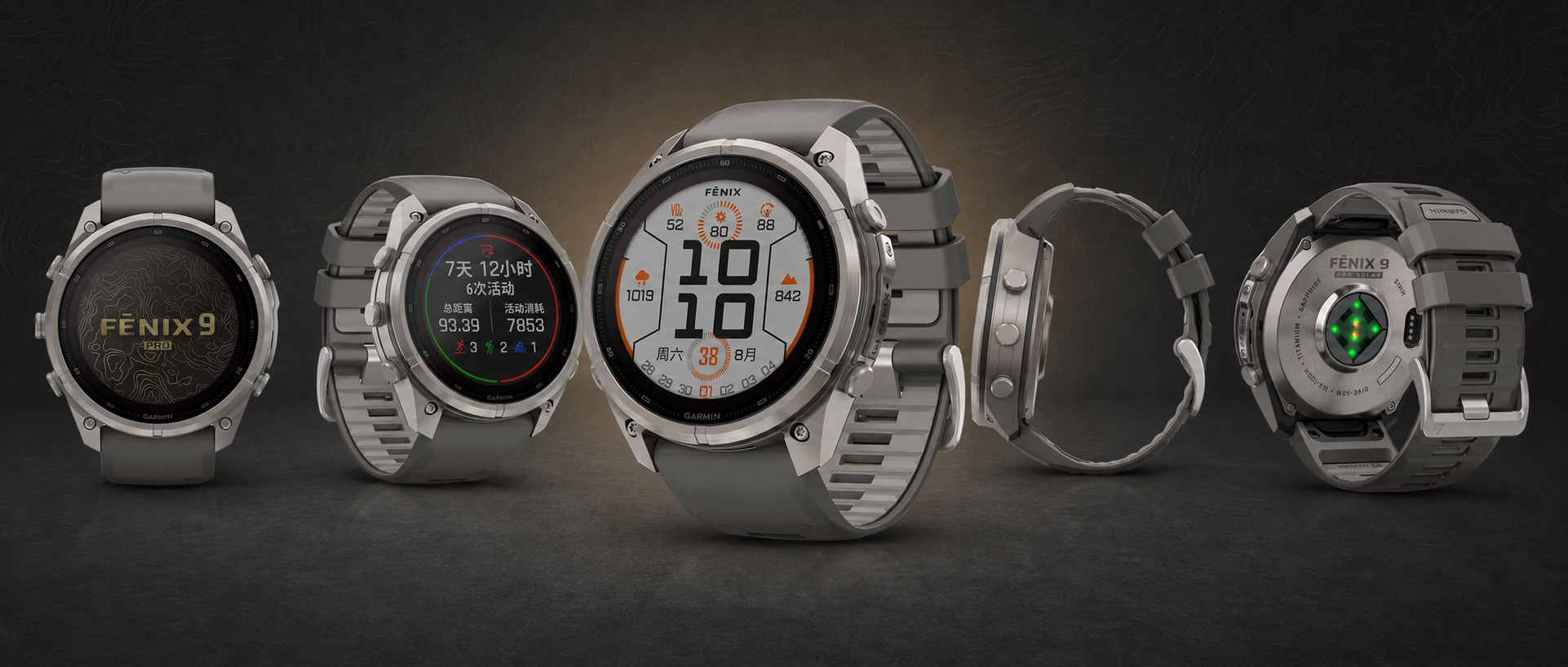
Garmin has officially announced the Fenix 9 and Fenix 9 Pro, confirming 64GB of storage, 50% more RAM than the Fenix 8, Sapphire across the Fenix 9 lineup and the first 1.5-inch AMOLED display on a Fenix.
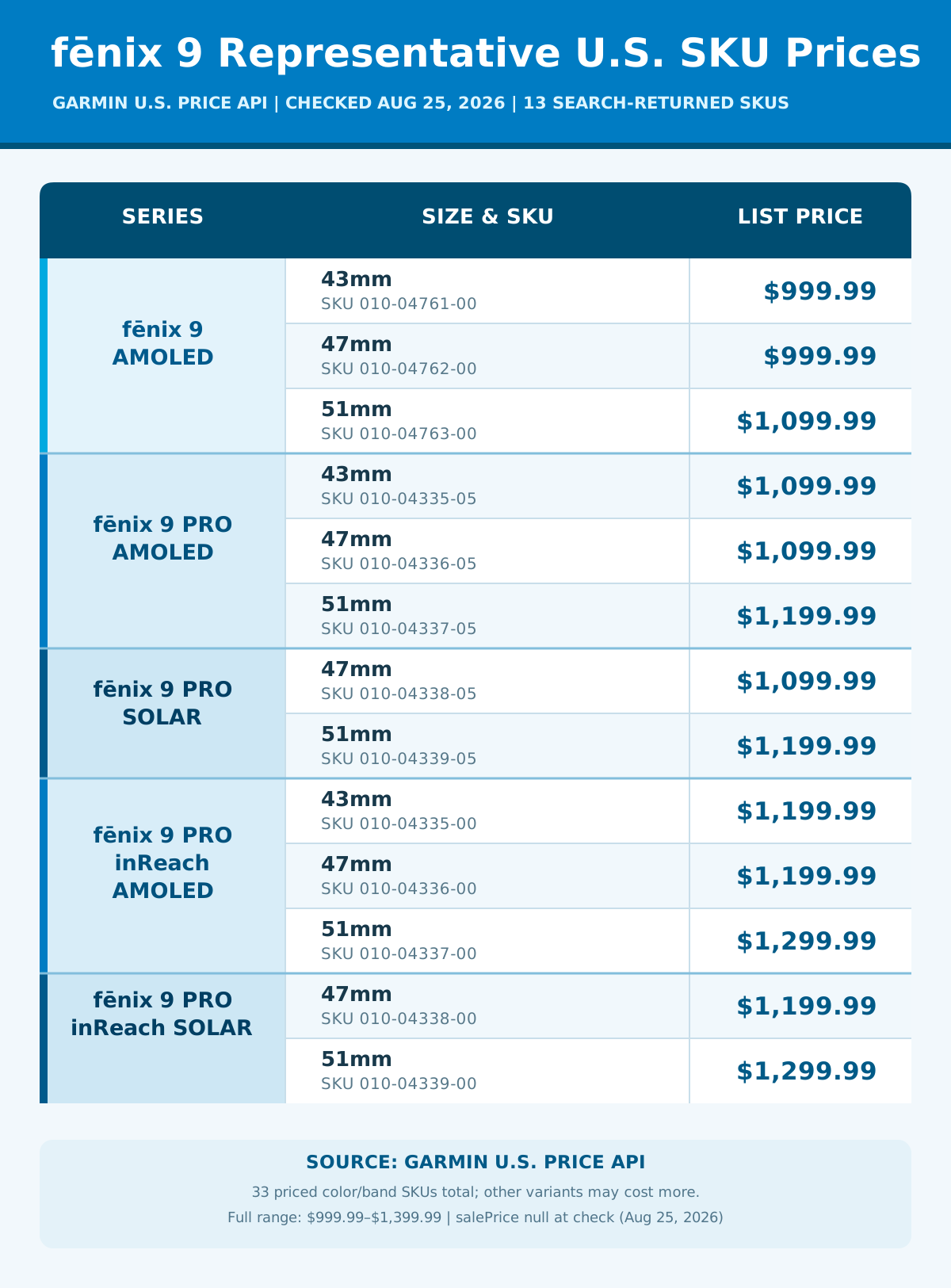
Garmin says the series is available now and starts at $999.99. Its U.S. product group currently contains 13 model families and 33 priced color or band SKUs, spanning $999.99 to $1,399.99. These are first-party U.S. prices, not currency conversions.
Quick Take
Official U.S. pricing: Garmin lists eight Fenix 9 and Fenix 9 Pro model families without inReach, plus five Fenix 9 Pro families with inReach. Their starting prices are $100 higher than the corresponding Pro models; premium color and band SKUs can cost more.
Official hardware changes: Garmin confirms 64GB of storage, 50% more RAM, Sapphire on Fenix 9, a titanium case on Fenix 9 Pro and a brighter Pro AMOLED display rated up to 3,000 nits.
Display calculation: Garmin describes the 51mm Pro AMOLED display as 15% larger than the Fenix 8 display. The listed diameters produce a 14.8% increase by circular area before rounding.
Still unknown: Garmin does not name the processor, exact RAM capacity, eMMC part number or storage speed. Real-world performance still needs independent testing.
Our earlier Garmin Fenix 9 image report shows the 43mm, 47mm and 51mm designs. This article focuses on what the accompanying data does—and does not—tell us.
Official Garmin Fenix 9 U.S. Prices
Garmin's official site search returned one representative SKU for each of 13 model families. We queried Garmin's U.S. price endpoint for those SKUs, then used Garmin's product-group price data to check all 33 priced color and band variants.
| Official U.S. model family | Display | Size | Representative SKU | SKU price | All color/band SKU prices |
|---|---|---|---|---|---|
| Fenix 9 | AMOLED | 43mm | 010-04761-00 | $999.99 | $999.99 |
| Fenix 9 | AMOLED | 47mm | 010-04762-00 | $999.99 | $999.99–$1,049.99 |
| Fenix 9 | AMOLED | 51mm | 010-04763-00 | $1,099.99 | $1,099.99–$1,149.99 |
| Fenix 9 Pro | AMOLED | 43mm | 010-04335-05 | $1,099.99 | $1,099.99–$1,149.99 |
| Fenix 9 Pro | AMOLED | 47mm | 010-04336-05 | $1,099.99 | $1,099.99–$1,149.99 |
| Fenix 9 Pro | AMOLED | 51mm | 010-04337-05 | $1,199.99 | $1,199.99–$1,249.99 |
| Fenix 9 Pro | Solar | 47mm | 010-04338-05 | $1,099.99 | $1,099.99 |
| Fenix 9 Pro | Solar | 51mm | 010-04339-05 | $1,199.99 | $1,199.99 |
| Fenix 9 Pro with inReach | AMOLED | 43mm | 010-04335-00 | $1,199.99 | $1,199.99–$1,349.99 |
| Fenix 9 Pro with inReach | AMOLED | 47mm | 010-04336-00 | $1,199.99 | $1,199.99–$1,299.99 |
| Fenix 9 Pro with inReach | AMOLED | 51mm | 010-04337-00 | $1,299.99 | $1,299.99–$1,399.99 |
| Fenix 9 Pro with inReach | Solar | 47mm | 010-04338-00 | $1,199.99 | $1,199.99 |
| Fenix 9 Pro with inReach | Solar | 51mm | 010-04339-00 | $1,299.99 | $1,299.99 |
All 13 representative-SKU responses identified the requested part number, used USD and returned salePrice: null. The product-group response likewise contained no active sale or savings value across its 33 priced SKUs. We therefore report regular list prices. Garmin's price data does not provide reliable stock status.
Standard AMOLED Finally Feels Premium
Garmin confirms that the Fenix 9 includes a scratch-resistant Sapphire lens. Its U.S. catalog lists a titanium bezel, fiber-reinforced polymer case and titanium rear cover for the Standard AMOLED models.
That matters because the Fenix 8 range launched with Gorilla Glass and stainless steel configurations alongside separate Sapphire and titanium options.
In other words, the entry Fenix 9 configuration no longer makes buyers move up a tier just to get a Sapphire lens and titanium bezel.
The Pro models go further. Garmin calls the Fenix 9 Pro its first Fenix with a titanium watch case. Pro Solar records list Power Sapphire and the same titanium construction.
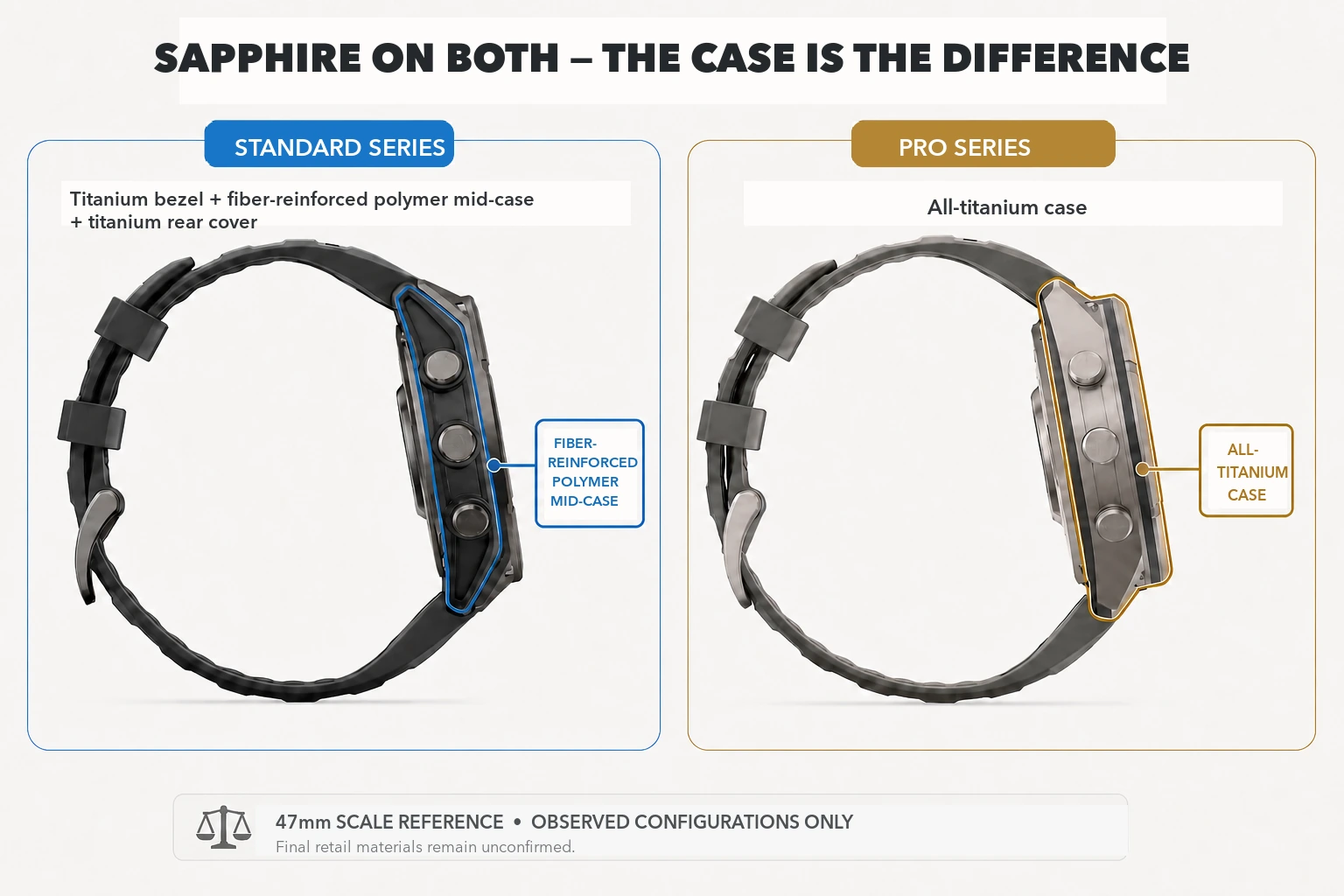
Materials and color choices can still vary by SKU and region, so the comparison above describes the U.S. catalog records and supplied product images reviewed here.
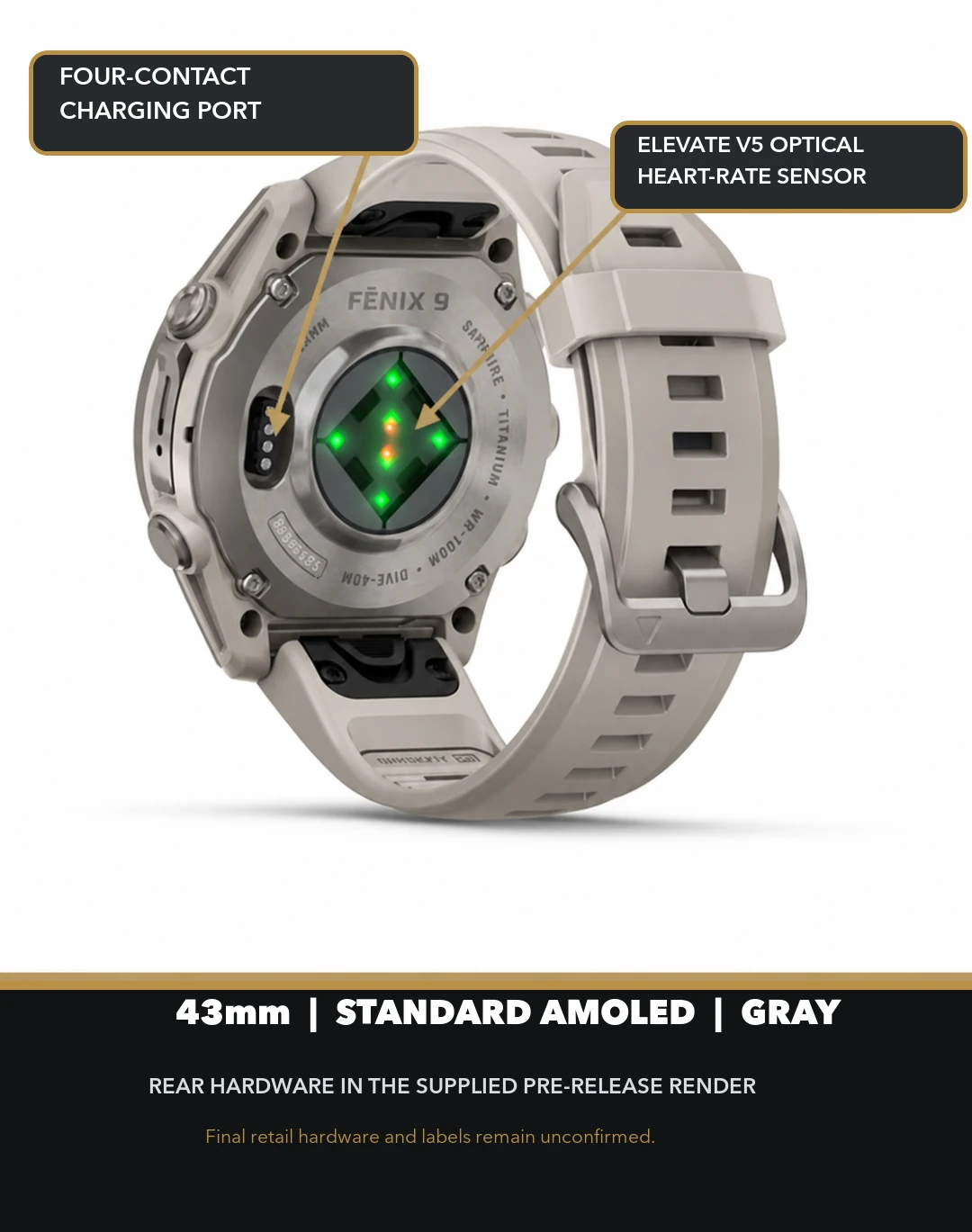
The supplied 43mm Standard AMOLED rear render labels a four-contact charging port and an Elevate V5 optical heart-rate sensor. Those identifications come from the supplied image; Garmin's launch release does not separately specify the charging connector or sensor generation.
The 51mm Pro Gets a 14.8% Larger Display
The clearest display upgrade appears on the 51mm Pro AMOLED. Garmin confirms that it is the first 1.5-inch AMOLED display on a Fenix and describes it as 15% larger than the Fenix 8 display without increasing the case size. Its listed diameter grows from 35.56mm to 38.1mm.
Because display area grows with the square of diameter, that 7.14% diameter increase produces a 14.8% increase in circular display area.
Resolution rises from 454×454 to 466×466. That is 5.36% more pixels in the square matrix, far less than the increase in panel area.
The result is a larger picture, not a denser one. Calculated pixel density falls from about 324 ppi to 311 ppi, so “466×466” should not be read as a sharpness upgrade by itself.
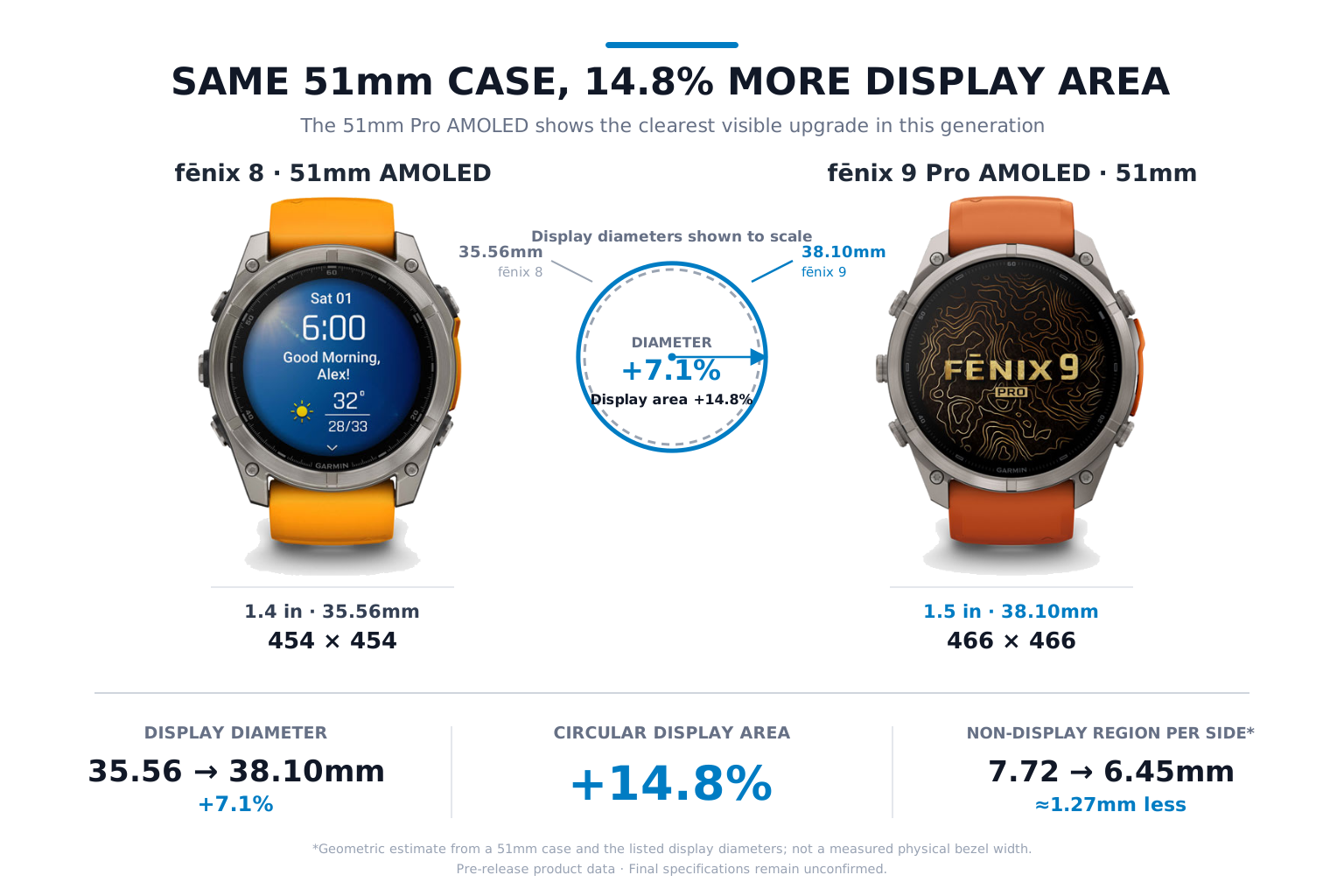
A simple case-to-display calculation also reduces the radial non-display area from about 7.72mm to 6.45mm. That 1.27mm change is a geometric estimate, not a physical bezel measurement.
The other 43mm, 47mm and 51mm catalog configurations do not show a comparable panel-size increase. The 51mm Pro AMOLED is the clear exception.
Storage Doubles to 64GB
Garmin confirms 64GB of storage across the announced Fenix 9 lineup. Comparable Fenix 8 models list 32GB.
Garmin says the capacity can hold twice as many maps as Fenix 8 and up to 7,000 songs. It also leaves more room for apps and activity files, although actual user-accessible space will be lower after system partitions and preloaded data.
Capacity alone says nothing about speed. A newer 64GB eMMC part could improve large-file transfers, but the records do not identify the memory part, controller, interface mode or measured throughput.
Longsys now offers 64GB and 128GB subsize eMMC for compact devices. That shows such parts exist; it does not identify the storage inside a Fenix 9.
Does Garmin Confirm a New Processor?
No. Garmin confirms 50% more RAM than Fenix 8 and an updated map engine that can pan maps up to 30% faster, but it does not name the processor or disclose the exact RAM capacity.
The 64GB figure describes persistent storage, not the main processor or RAM.
A documented Fenix 8 Solar teardown identified an NXP i.MX RT595 and a separate 32GB FORESEE eMMC package.
Replacing that external storage with a 64GB part would not, by itself, require Garmin to replace the main system-on-chip.
The NXP i.MX RT500 family already supports external eMMC 5.0.
The newer i.MX RT700 is a plausible wearable platform, but 64GB does not distinguish between them.
The larger 466×466 display is not proof either. RT500 already includes graphics and display interfaces capable of driving panels with substantially more pixels.
A clear teardown photo, a regulatory internal image, a manufacturer disclosure or processor-specific firmware evidence would be needed to establish a platform change.
Battery Life as Counterevidence
Garmin's Standard AMOLED records list the same smartwatch-mode figures as the comparable Fenix 8 sizes: 10 days for 43mm, 16 days for 47mm and 29 days for 51mm.
Their listed Max. Battery GPS mode figures also remain 49, 81 and 145 hours.
That flat pattern does not prove Garmin kept the same processor. Battery life also depends on the display, battery size, sensors, radios, firmware, GPS settings and how Garmin rounds its estimates.
It does show that any possible processor change has not produced an obvious range-wide efficiency leap in the Standard AMOLED battery table.
The Pro records are more mixed, and Garmin says the largest Pro AMOLED reaches 31 days while select solar models reach up to 57 days under its stated solar conditions. That makes battery life useful context, not a processor-identification tool.
Garmin's Fenix 8 battery guide also notes that real results vary with enabled features, GPS, sensors and notifications.
Is the Garmin Fenix 9 Worth Buying?
At the official list prices returned by Garmin's U.S. API, the Fenix 9 looks like a meaningful practical upgrade rather than a complete reinvention.
The Standard AMOLED may offer the strongest value change because Sapphire and titanium move into the official base configuration. The 51mm Pro AMOLED has the most visible upgrade, with its 14.8% larger display area.
The move to 64GB is useful for map and music users across the announced configurations. Garmin separately confirms 50% more RAM and faster map panning, but none of those facts identifies the processor.
The Fenix 9 starts at $999.99. The Pro range without inReach starts at $1,099.99, while adding inReach raises the starting price of each matching Pro size and display configuration by $100. Premium color and band options bring the full currently priced U.S. range to $1,399.99.
Buyers focused on weight, real battery life, sensor changes or map performance should still wait for hands-on testing.
What Remains Unconfirmed
Garmin's launch release says the Fenix 9 series is available now, while some U.S. product-page data during the rollout said “Available to order on August 28th.” The price endpoint does not provide reliable per-SKU inventory, so live stock and shipping times still need to be checked at purchase.
The processor, exact RAM capacity, eMMC model and speed, usable storage, detailed GNSS hardware and real-world performance remain unknown.
The official U.S. catalog does establish five Pro models with inReach connectivity. It does not list a Fenix 9 MicroLED configuration in the 13 records returned by the site search.
For now, the official U.S. prices, 64GB capacity, 50% RAM increase, 51mm Pro display and listed materials are first-party facts. Any claim about the exact processor remains inference.