- Published on
Did Garmin Fenix 9 Upgrade Its Processor Chip? What the Evidence Says
Garmin has not publicly confirmed the processor chip inside the Fenix 9. The company has, however, confirmed a set of performance-related upgrades: 50% more RAM than Fenix 8, an updated map engine, map panning that is up to 30% faster and 64GB of onboard storage.
That means the safest answer is this: Fenix 9 clearly has a stronger performance platform for maps and navigation, but Garmin has not officially confirmed a new CPU or SoC model.

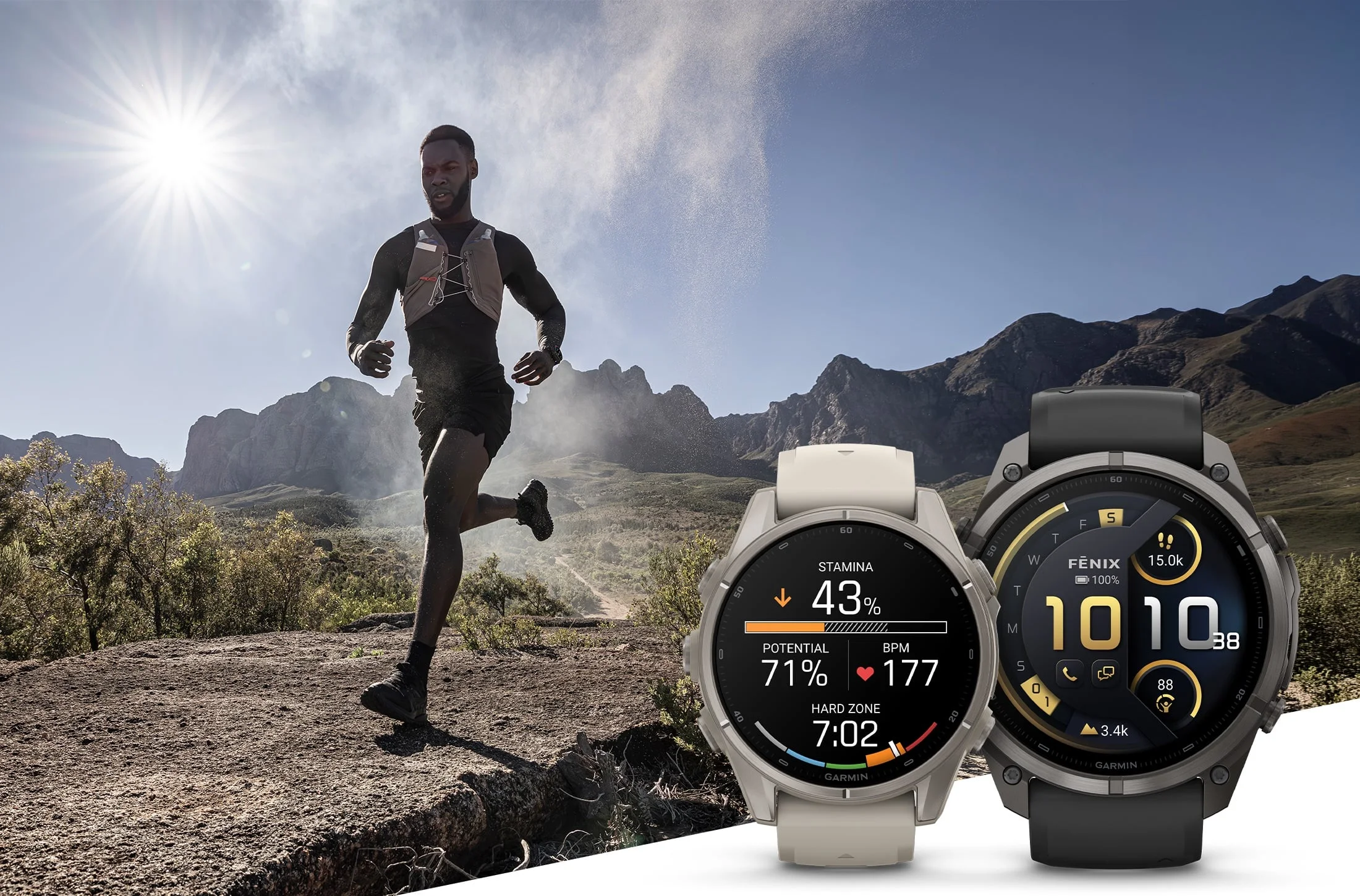
Image: Fenix 9 lineup render set used in our earlier image report. The processor is not visible from product images; internal hardware still needs official disclosure or teardown evidence.
This article separates confirmed facts from reasonable inference. It was last checked on August 26, 2026.
Quick Verdict
| Question | Current answer |
|---|---|
| Did Garmin confirm a new Fenix 9 processor chip? | No. Garmin has not named the processor or SoC. |
| Did Garmin confirm a RAM upgrade? | Yes. Garmin says Fenix 9 has 50% more RAM than Fenix 8. |
| Did Garmin confirm faster map behavior? | Yes. Garmin says map panning is up to 30% faster with an updated map engine. |
| Does 64GB mean more RAM? | No. 64GB is storage for maps, music and files, not working memory. |
| Is a processor upgrade plausible? | Yes, but it remains an inference until Garmin, a teardown or firmware evidence confirms it. |
For broader pricing, display and storage details, see our separate official Garmin Fenix 9 U.S. prices and specifications report.
What Garmin Officially Confirmed
The strongest source is Garmin's own Fenix 9 launch announcement. Garmin confirms three facts that matter for performance:
- Fenix 9 has 50% more RAM than Fenix 8.
- Fenix 9 uses an updated map engine.
- Map panning can be up to 30% faster.
Garmin also says the series includes 64GB of memory for more maps and music. That is important, but it describes storage capacity rather than the main processor.
Those statements prove that the Fenix 9 is not only a visual refresh. Garmin changed the parts of the system that directly affect map handling. They do not identify the chip.
RAM Upgrade Is Not the Same as a Processor Upgrade
The 50% RAM increase is the key confirmed hardware clue, but it should be read carefully.
RAM is working memory. It helps the watch keep map tiles, route data, interface assets and active tasks ready while the system is running. More RAM can reduce reloads and help a map-heavy interface feel smoother.
A processor chip, or SoC, is different. It includes the compute cores and often other controllers that handle graphics, sensors, memory, storage, connectivity and power states.
Garmin can increase RAM without changing the processor family. Garmin can also change both at the same time. The current public materials confirm the first part and leave the second part open.
Why a New Chip Is Plausible
The new-chip theory is reasonable because Garmin ties the Fenix 9 upgrade to heavy on-watch tasks.
Maps are among the most demanding features on a Garmin outdoor watch. Panning, zooming, redrawing contour detail and keeping route context available all create pressure on memory bandwidth, storage access, graphics handling and CPU scheduling.
When Garmin says the map engine is updated and panning is up to 30% faster, it is describing a real user-facing improvement. The combination of more RAM and faster map interaction suggests Garmin found more headroom in the system.
That headroom could come from several places:
- more working memory
- faster memory access
- storage changes
- firmware and map-rendering optimization
- display pipeline tuning
- a newer processor or related platform component
Only the first and the map-engine software change are officially confirmed. The rest are plausible explanations, not public facts.
What DESFit's Video Adds
DESFit published Garmin Fenix 9 First Look // Unboxing and Up-Close Details on August 25, 2026, the same day Garmin announced the product. That kind of launch-day hands-on video is useful because it shows the real device, menus, physical design and early interaction behavior.
For this specific question, though, a first-look video should be treated as supporting evidence rather than primary proof. A reviewer can show whether the watch feels more responsive in use, but the exact processor chip requires a verified internal spec, firmware evidence, regulatory material or teardown.
So the multi-source reading is simple: Garmin confirms the RAM and map-performance upgrades; DESFit provides launch-day hands-on context; neither currently gives a public processor model.
64GB Storage Helps Maps, but It Is Not RAM
Storage is another area where online discussions can get messy.
Garmin says Fenix 9 includes 64GB of memory for maps and songs. In product-spec language, that refers to persistent storage. It is where maps, music, apps, activity files and system data live.
RAM is temporary working memory used while the watch is active. It is not where offline maps are stored long term.
For the Fenix 9, the clean breakdown is:
| Item | What Garmin says | What it means |
|---|---|---|
| RAM | 50% more than Fenix 8 | Confirmed working-memory upgrade |
| Storage | 64GB | Confirmed map and music capacity |
| Processor chip | Not named | Still unknown |
| Map panning | Up to 30% faster | Confirmed map-performance claim |
This is why it is accurate to say Fenix 9 has a stronger map-performance platform. It is not accurate to say 64GB proves a new processor.
What Product Images Can and Cannot Prove
The Fenix 9 product images show the case, display, buttons, bands and visible rear hardware. They help explain the lineup and design changes, especially across Standard AMOLED, Pro AMOLED and Pro Solar models.
They do not reveal the processor.
Our earlier Garmin Fenix 9 image report showed the external designs before Garmin's official announcement. Those images were useful for case and color analysis, but internal silicon cannot be identified from renders.
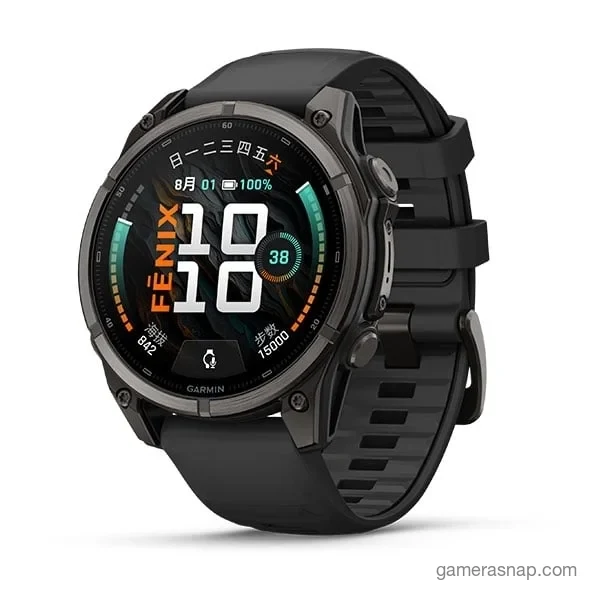
Image: Fenix 9 Standard AMOLED 47mm in black. External renders can show the product design, but not the internal processor package.
What Would Actually Confirm the Chip?
A real processor confirmation would require stronger evidence than a spec summary.
The useful evidence would be one of these:
- an official Garmin technical disclosure
- an internal teardown with readable chip markings
- regulatory internal photos that show the board clearly
- firmware references that identify the platform
- a reliable component report from a known teardown source
Without one of those, the exact Fenix 9 processor remains unknown.
A Fenix 8 Solar teardown previously identified internal components in that generation, including an NXP i.MX RT595 and separate eMMC storage. That kind of board-level evidence is the level of proof needed for the Fenix 9 as well.
The existence of newer embedded platforms, such as the NXP i.MX RT700, makes a future Garmin platform update plausible. It does not prove that Fenix 9 uses one.
What This Means for Fenix 8 Owners
If you own a Fenix 8, the confirmed Fenix 9 performance upgrade is mostly about maps.
The practical benefits should matter most if you regularly use:
- offline TopoActive maps
- trail navigation
- route panning and zooming
- cycling or hiking maps
- music and map storage at the same time
- navigation while recording long activities
If you mostly use health tracking, gym workouts, notifications, sleep tracking and basic GPS recording, the processor-chip question may not be a strong upgrade reason by itself.
In plain terms: upgrade for the confirmed map, storage, display and model-line changes, not only for an unconfirmed chip rumor.
Better Wording for the Processor Question
Use this wording if you want to stay technically accurate:
Garmin has not confirmed a new Fenix 9 processor chip. It has confirmed 50% more RAM, an updated map engine, up to 30% faster map panning and 64GB storage. Those changes point to a stronger internal performance platform, but the exact processor remains undisclosed.
Avoid this wording:
Garmin officially confirmed a new Fenix 9 processor.
That is not supported by the current public sources.
FAQ
What processor does the Garmin Fenix 9 use?
Garmin has not publicly listed the Fenix 9 processor model. As of August 26, 2026, official materials confirm RAM, storage and map-engine upgrades, but not the exact CPU or SoC.
Did Garmin upgrade the Fenix 9 RAM?
Yes. Garmin says Fenix 9 has 50% more RAM than Fenix 8. Garmin has not published the exact RAM capacity.
Is 64GB the RAM size?
No. The 64GB figure describes storage capacity for maps, music and files. RAM is separate working memory.
Is Fenix 9 faster than Fenix 8?
For maps, Garmin says yes. Garmin says map panning is up to 30% faster. Garmin has not said every part of the watch is 30% faster.
Does DESFit confirm the Fenix 9 processor?
DESFit's first-look video is useful hands-on coverage, but it does not replace official chip disclosure or teardown evidence. Treat it as context for real-world interaction, not definitive processor identification.
Should I upgrade from Fenix 8 to Fenix 9 for the processor?
Not for the processor alone. Upgrade if the confirmed improvements matter to you: more RAM, faster map panning, 64GB storage, updated mapping behavior and the new Fenix 9 model lineup.
Bottom Line
The Garmin Fenix 9 has confirmed performance-related upgrades, especially for maps. More RAM, faster map panning and 64GB storage are real changes.
But the processor chip is still not officially named. Until Garmin discloses it or a teardown identifies it, the most accurate conclusion is that Fenix 9 has an upgraded performance platform, while the exact processor remains unconfirmed.